Working Principle and Functions of Solar Inverters
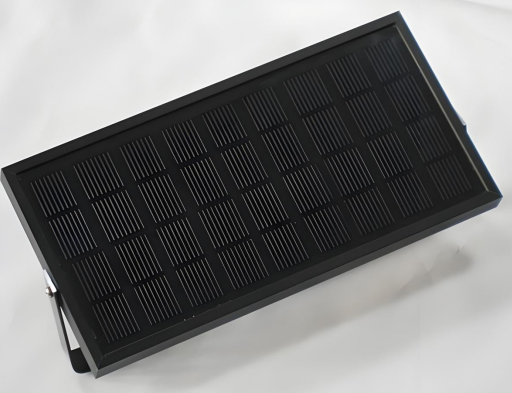
A photovoltaic inverter, also known as a power conditioner, is an inverter that converts the variable DC voltage generated by solar panels into AC power at the frequency of municipal electricity. The converted power can be fed back into the commercial power grid or used for off-grid power supply systems.
I. Working Principle of Solar Inverters
A solar inverter is mainly composed of switching components such as transistors. By regularly turning these switching components on and off repeatedly, the DC input is converted into AC output. However, the output waveform generated by such a simple on-off circuit is not practical for real-world use.
High-frequency Pulse Width Modulation (PWM) is generally adopted: the pulse width narrows near the two ends of the sine wave and widens at the middle of the sine wave. Within each half-cycle, the switching components operate in one direction at a fixed frequency to form a train of pulse waves. These pulse waves then pass through a simple filter to generate standard sine waves.
II. Functions of Solar Inverters
Beyond DC-AC conversion, solar inverters can maximize the power output of solar panels and deliver system fault protection. Their core functions are summarized as automatic start-stop, Maximum Power Point Tracking (MPPT), anti-islanding protection, automatic voltage regulation, DC monitoring and DC ground fault detection.
1. Automatic Start-Stop Function
After sunrise, solar irradiance gradually rises and the output of solar panels increases accordingly. Once the output power meets the minimum operating requirement of the inverter, the inverter automatically starts running.
During operation, the inverter constantly monitors the output of solar panels and keeps operating as long as the panel output exceeds its minimum operating threshold, even on cloudy days. When sunlight fades and the panel output drops to nearly zero at sunset, the inverter switches to standby mode.
2. Maximum Power Point Tracking (MPPT) Function
The input power of solar panels varies non-linearly with changes in sunlight intensity and ambient temperature. Solar panels act as neither constant voltage sources nor constant current sources; their output power fluctuates with output voltage and is independent of loads.
At first, the output current remains constant as voltage rises. When the power hits a certain threshold, the current declines with rising voltage and falls to zero once the panel reaches its open-circuit voltage.
3. Islanding Effect Detection and Control Function
Under normal power generation conditions, grid-connected PV systems are linked to the utility grid and transmit usable power to it. When the grid loses power, however, the grid-connected PV system may continue operating independently together with local loads — this phenomenon is called the islanding effect.
Islanding poses severe safety hazards to personnel, grid operation and the inverter itself. Therefore, grid connection standards mandate that all grid-tied solar inverters must be equipped with islanding detection and control capabilities.
4. Grid Monitoring and Grid Connection Function
Before starting grid-connected power generation, grid-tied inverters draw a small amount of power from the grid to monitor grid parameters including voltage, frequency and phase sequence. The inverter then adjusts its own output parameters to fully synchronize with the grid, and only connects to the grid once synchronization is completed.
5. Low Voltage Ride-Through (LVRT) Function
When power system faults or disturbances cause a temporary voltage drop at the grid connection point of a solar power station, the photovoltaic power station can stay connected to the grid and maintain continuous operation within a specified voltage drop range and time window.
Conclusion
The solar inverter acts as the intelligent brain of a photovoltaic power generation system, precisely regulating energy conversion and transmission to enable efficient utilization of inexhaustible, clean solar energy. It not only drives the ongoing energy transition but also embodies our vision of a green energy future.