Under the Global Carbon Neutrality Goal: Is There Overcapacity in Solar Panel Production?
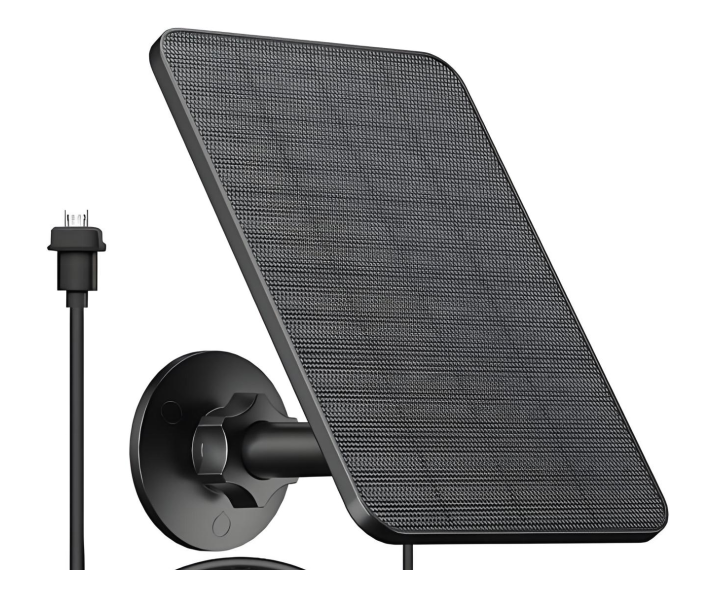
Amid the global surge toward carbon neutrality, the solar panel industry stands as a core engine of the energy transition. Yet as global photovoltaic installations keep rising, a critical question emerges: has production capacity far outstripped demand? Behind this "capacity race" lie both opportunities brought by technological leaps and hidden risks of structural overcapacity.
I. Unrestrained Capacity Expansion and Disparities with Market Reality
Since the accelerated rollout of global carbon neutrality strategies in 2020, solar panel production capacity has grown exponentially. As of Q1 2026, global polysilicon capacity exceeded 3.5 million metric tons, while wafer, cell and solar panel capacities each topped 1,000 GW. By contrast, global new installed demand stood at only 550–600 GW, creating a supply-demand ratio above 2:1. This runaway capacity expansion has been fueled by local government subsidies, low-interest loans and massive capital inflows. However, growth in end-market demand has failed to keep pace with capacity expansion, resulting in soaring inventory levels. Taking polysilicon as an example, social inventories hit 420,000–450,000 metric tons in October 2026, equivalent to one-third of annual demand, triggering brutal price wars across the segment.
II. Structural Contradictions Beneath the Surface of Overcapacity
Overcapacity is not merely a matter of excess output volume; it stems from intertwined technological upgrades and market segmentation:
-
Shortage of viable production capacity amid generational technological gaps
While nominal capacity figures are massive, high-efficiency products account for a limited share. For instance, mass production efficiency of N-type TOPCon cells has surpassed 25%, whereas outdated PERC production lines stall at below 23% efficiency, rendering such low-efficiency capacity obsolete amid market competition. Although nominal global polysilicon capacity exceeded 3.5 million tons in 2026, only 2.4 million tons meet new energy consumption standards, with 16% of total capacity facing natural market exit.
-
Unbalanced profit distribution across the industrial chain exacerbates tensions
The upstream polysilicon segment features high market concentration, with leading enterprises holding over 60% market share and strong pricing power. Downstream solar panel manufacturers, by contrast, face sluggish price transmission, squeezing profit margins to just 1–2 US cents per watt. This lopsided industrial structure delays capacity adjustments, and resumption of production by second- and third-tier suppliers further intensifies supply pressure.
-
Uncertainty on the demand side amplifies industry risks
China’s installation targets for the 15th Five-Year Plan have yet to be finalized, and divergent local electricity pricing policies dampen developer enthusiasm. Overseas markets suffer from trade barriers (such as the U.S. FEOC regulations) and phased cuts to European subsidies, leading to slower-than-expected demand growth. Between June and September 2026, China’s new photovoltaic installed capacity plummeted 38%–55% year-on-year, with solar panel manufacturers cutting production schedules by 3% month-on-month — tangible evidence of weakening demand.
III. Pathways to Resolution: Shifting from Scale Competition to Value Competition
Beneath the shadow of overcapacity, the industry is undergoing profound transformation:
-
Technological iteration as the core growth driver
Next-generation BC and second-gen TOPCon technologies push cell efficiency above 26%, while base metal metallization delivers clear cost reduction pathways. Technological dividends can partially offset pressures from excess supply.
-
Accelerated segmentation of market structures
Distributed photovoltaics now make up 40% of total installations, with industrial and commercial projects emerging as investment hotspots thanks to robust power consumption capacity. High-efficiency modules command strong demand in premium overseas markets, opening up sizable premium margins for differentiated products.
-
Dual regulation via policy and market mechanisms
Six central government departments have jointly rolled out measures to curb predatory low-price competition, while stricter energy consumption standards force backward capacity out of the market. Green certificate trading and carbon taxation policies boost returns on power generation projects, guiding the industry’s shift from volume-driven to quality-driven growth.
Overcapacity in the solar panel sector is essentially an inevitable growing pain during the energy transition. As the industry evolves from policy-led expansion toward coordinated market and ecological development, technological breakthroughs, business model innovation and global deployment will hold the key to resolving current challenges. This race has no finish line — only enterprises that embrace continuous evolution can forge steady progress in the long journey toward carbon neutrality.