Solar Panel Power Supply Solutions for Remote Areas: Case Analysis
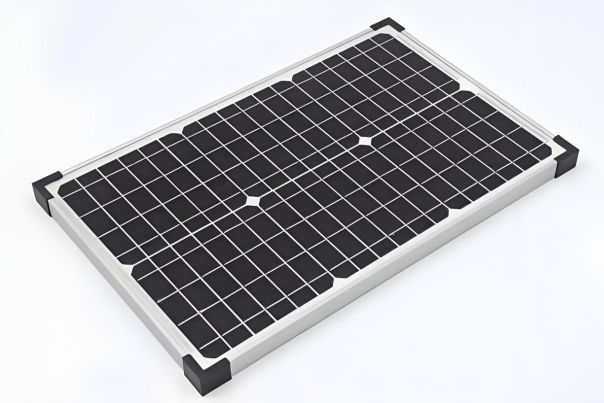
In vast remote regions, inadequate power supply has long been a major bottleneck restricting local development. Conventional power grids are difficult to expand here due to complex terrain, scattered populations and exorbitant laying costs. Boasting clean and renewable attributes, solar panels have become a core solution to this challenge. This article analyzes the practical applications and technical principles of solar power systems in remote areas through real-world cases.
Case 1: Pastoral Areas of Xinyuan County, Xinjiang — From Power Outages to Improved Living Standards
The pastoral areas of Xinyuan County in Xinjiang are located in remote terrain, where herdsmen move with water and grass resources. Extending traditional power grids would cost tens of thousands of yuan per household. In 2025, a counterpart assistance project from Yangzhou to Xinjiang installed solar power systems for 414 herdsmen households, completely transforming their power access.
The systems adopt monocrystalline silicon solar panels with a conversion efficiency of 22%, paired with lithium iron phosphate batteries for energy storage. They generate 3 to 5 kilowatt-hours of electricity daily, sufficient to meet basic power demands for lighting, mobile phone charging, refrigerators and other appliances. "We used to rely on candles at night. Now our children can study under electric lights, and we can listen to the radio to keep up with news from the outside world," said Beilekebali Hasen, a local herdsman.
Key Technical Features
-
Modular Design: Solar panels, batteries and inverters are fully integrated into one unit, easy for herdsmen to transport to remote mountain areas on horseback.
-
High Protection Rating: The equipment enclosure reaches IP65 standard, wind and sand resistant, and capable of withstanding extreme temperatures ranging from -25°C to 60°C.
-
Intelligent Management: Built-in MPPT controllers dynamically adjust power output, ensuring continuous power supply for 3 consecutive days even on rainy or overcast days.
Case 2: Kanas National Nature Reserve — Green Power for Ecological Protection
Ranger stations deep in the Kanas Nature Reserve once relied on diesel generators for power, which incurred high operational costs and caused environmental pollution. In 2025, solar power systems were put into service here, consisting of ten 200W photovoltaic panels and a 200kWh lithium battery pack. The annual power output exceeds 12,000 kilowatt-hours, fully replacing diesel power generation.
"A solar system runs silently. We no longer worry about generator malfunctions during night patrols," shared Akukule, a forest ranger.
Technical Advantages
-
Complementary Energy System: Reserved interfaces for wind turbines enable future upgrades to a wind-solar hybrid system for higher power supply stability.
-
Remote Monitoring: An IoT module transmits real-time power generation data, allowing managers to remotely adjust the priority of electrical loads.
-
Long Lifespan Design: The solar panels come with a 25-year warranty, and the batteries support over 6,000 charge-discharge cycles, cutting the overall lifecycle costs.
Case 3: Rural West Africa — Balancing Cost-effectiveness and Reliability
West Africa enjoys an annual sunshine duration of 2,200 hours, yet less than 30% of the region is covered by public power grids. Local enterprises have launched integrated photovoltaic and energy storage solutions.
Take the 300W system as an example: it is equipped with one 200W photovoltaic panel and a 30Ah lithium battery, generating 1 kilowatt-hour of electricity per day to power LED lights, electric fans and small televisions. Adopting bidirectional buck-boost topology technology, the system boosts power generation efficiency by 6%. Meanwhile, the cost is controlled within 2,000 yuan per household, slashing power expenses by 60% compared with diesel generation.
Technical Insights & Industry Trends
-
Prioritize Regional Adaptation: Power supply solutions for remote areas must be customized according to local sunshine conditions, terrain and power load demands, instead of adopting a one-size-fits-all approach.
-
Cost Reduction Across the Industrial Chain: Mass production lowers the cost of solar panels, while optimized energy storage technologies such as lithium iron batteries extend service life.
-
Coordination Between Policies and the Market: Government subsidies and tax incentives accelerate the popularization of relevant technologies, while market-oriented operation and maintenance modes like community co-management guarantee long-term stable operation.
The application of solar panels in remote areas proves that the combination of technological advancement and scenario adaptation enables clean energy to take root and thrive. Rather than pursuing grand visions, it delivers steady power for every light and every device in a down-to-earth manner — this embodies the essence of sustainable development.