Integration of Solar Panels and Artificial Intelligence: Intelligent Power Generation Optimization
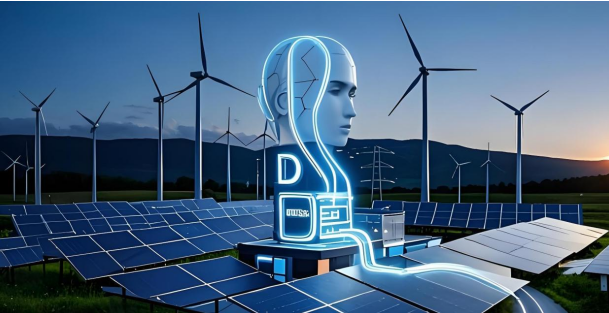
Driven by carbon neutrality goals, solar photovoltaic (PV) power generation is undergoing a transformation from "scale expansion" to an "efficiency revolution". Constrained by fixed tilt angles, passive operation & maintenance (O&M) and extensive management, conventional PV power stations suffer annual power generation losses ranging from 15% to 25%. In-depth integration with artificial intelligence (AI) is reshaping the technical logic and industrial landscape of solar power generation.
I. Dynamic Optimization: Maximize Power Output from Every Ray of Sunlight
The core efficiency of PV power generation hinges on solar panels’ capacity to capture solar irradiance. Traditional solutions rely on fixed tilt angles set by human experience, failing to adapt to day-night cycles, seasonal shifts and sudden weather fluctuations. AI-powered intelligent tracking systems deliver real-time dynamic adjustments through multi-source data fusion:
-
Meteorological Forecasting Integrate satellite cloud imagery, ground meteorological station readings and drone inspection data to build high-precision solar irradiance prediction models that forecast light intensity variations up to four hours in advance.
-
Attitude Control Drawing on reinforcement learning algorithms and over 20 parameters including module attenuation coefficients and soiling-induced power losses, the system calculates the optimal tilt and azimuth angles in real time. Field tests at a 5MW PV station in California show that this technology boosts annual power generation by 21.3% and shortens the investment payback period by 8 months.
-
Shading Avoidance Adopt three-dimensional digital twin technology to simulate dynamic shading caused by tree growth, building obstructions and other factors, and automatically adjust the layout of PV arrays. One project previously suffered a 40% winter power loss due to unaccounted shading from an iced water tower; AI analysis completely eliminated such losses after deployment.
II. Predictive Maintenance: Shift from Reactive Emergency Repairs to Proactive Defect Prevention
Exposed to outdoor conditions year-round, solar panels face major failure risks including component degradation, hotspot effects and junction box malfunctions. AI enables precise intervention via equipment prognostics and health management (PHM) models:
-
Infrared Thermographic Monitoring Drones fitted with infrared sensors conduct periodic inspections, paired with computer vision technology to identify abnormal temperature rise areas with centimeter-level positioning accuracy.
-
Vibration Analysis Early Warning Vibration sensors are installed on support structures. Long Short-Term Memory (LSTM) neural networks analyze mechanical vibration signatures to predict faults such as bearing wear 30 days in advance.
-
Optimized Cleaning Scheduling Dynamic priority lists for panel cleaning are generated based on soiling levels, rainfall probability and power generation revenue models. After implementation at a PV station, water consumption for cleaning dropped by 35% and labor demand for O&M fell by 40%.
III. Energy Management: Build an Integrated Intelligent Agent for Power Generation, Storage and Consumption
AI breaks the "island effect" of standalone PV systems, maximizing economic value through deep coordination with energy storage systems and smart power grids:
-
Virtual Power Plant (VPP) Aggregation Distributed PV assets, electric vehicles and energy storage facilities are integrated into a unified dispatching platform. Reinforcement learning algorithms optimize charge-discharge strategies. A German VPP project achieves millisecond-level response across millions of terminals, cutting the levelized cost of electricity (LCOE) by 18%.
-
Electricity Price Responsive Dispatching Dynamic power output adjustment is implemented based on real-time electricity market prices and user load curves. Power output is reduced during off-peak hours to extend equipment service life, while full-load operation is activated during peak demand to maximize revenue.
-
Carbon Flow Tracking & Management Blockchain technology records the green attribute of every kilowatt-hour of electricity, providing credible data support for enterprises participating in carbon trading. After deployment in an industrial park, revenue from green power transactions rose by 25%.
IV. Technological Evolution and Industrial Insights
AI-enabled PV technology has entered the stage of engineering commercialization, yet challenges persist: model robustness under extreme weather conditions, digital retrofitting of aging power stations, data security and privacy protection, among others. Industrial practices demonstrate that technology integration should follow the principle of "standardized hardware, platform-based software and assetized data". An open industrial ecosystem must be established to lower adoption barriers. When the iteration speed of AI algorithms resonates with the degradation curve of solar panels, solar power generation will ultimately break free from its historical reliance on unpredictable weather, evolving into a reliable green power source within smart grids.